Your Immune System Is a Fossil from the Stone Age
Neolithic farmers won survival at a cost: their immune systems were rewired to handle epidemics, but that same wiring now triggers allergies, arthritis, and more. This is the story of evolution’s most dangerous bargain.
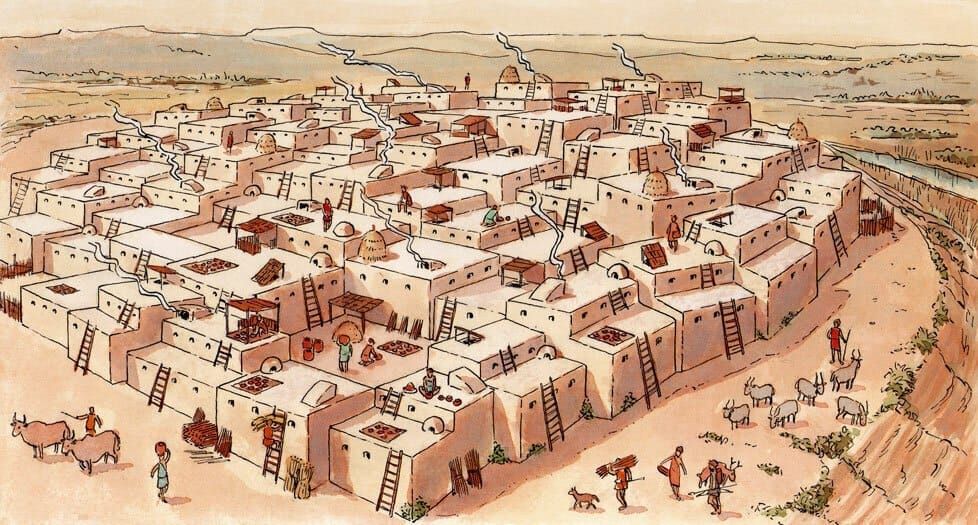
First published in tg-channel Cliomechanics in Russian
In the Paleolithic, population density made sustained epidemics highly unlikely: communities rarely crossed paths, and their lifestyle prevented waste from accumulating. Among isolated groups of 30–50 people, pathogens quickly died out for lack of new hosts—for measles or influenza to circulate without disappearing, a connected network of populations numbering in the hundreds of thousands is required, not dozens of individuals. The real threats to hunter-gatherers were not epidemics but injuries, predators, venomous bites, and localized infections. The human immune system was geared for rapid response: a powerful local inflammatory reaction to a wound could prevent sepsis, but against viral infections and systemic bacterial attacks, this mechanism was useless.
A radical shift in threats came in the Neolithic—permanent dwellings and livestock enclosures became incubators for zoonotic infections. Many classic diseases are former livestock pathogens: measles is related to the rinderpest virus, influenza came from waterfowl and pigs, animal poxviruses (including cowpox and camelpox) became ancestors or close relatives of human smallpox, and tuberculosis (including its bovine form) was transmitted to humans through contact with sick cattle and the consumption of raw milk. Farmers found themselves confined in tight spaces alongside human and animal waste near their dwellings, as well as insect vectors. In settlements like Çatalhöyük, people buried their dead right beneath the clay floors of their houses, only exacerbating contact with pathogens. The old survival strategy no longer worked.
An immune system accustomed to wounds, when faced with unfamiliar diseases in a densely populated settlement, could overreact dangerously. This meant surviving a scratch but very likely dying from some respiratory virus: a cascade of signaling proteins (cytokines) would drive immune cells to attack indiscriminately, and an overwhelmed immune system could trigger destructive inflammation in the lungs and other organs.
A harsh natural selection began. Surviving in crowded conditions and in close proximity to domesticated animals was far more achievable for those with specific mutations: individuals whose immune systems responded to viral threats in a more measured way, reducing the production of inflammatory cytokines, were more prone to chronic low-grade infections—but they did not die en masse in the first days of epidemics from pulmonary edema or immune shock. Carriers of a more tempered immune response had a greater chance of reaching reproductive age. All of this not only facilitated the population growth of the first cities but also, in the long run, gave an advantage to carriers of the altered immunity during migrations and encounters with populations whose immune systems had not undergone similar Neolithic selection.
This reshaping of immunity laid the foundation for the resilience of increasingly complex societies, and subsequent epidemics—from the Black Death and the Spanish flu to COVID-19—only reinforced these changes through the selection of genes such as ERAP2. However, once placed in the modern urban environment with its hygiene standards, our immunity—shaped by constant coexistence with parasites and infections—lost its real external enemy and periodically begins to mistake the body’s own tissues for a threat. The rising incidence of autoimmune diseases—from Crohn’s disease and ulcerative colitis to rheumatoid arthritis and multiple sclerosis—is a direct consequence of the changes that occurred in the first farmers. The evolutionary compromise that saved humanity from extinction in the Neolithic has turned into a ticking time bomb for residents of today’s megacities.
Sources:
- McNeill, W. Plagues and Peoples.
- Sahlins, M. Stone Age Economics.
- Diamond, J. Guns, Germs, and Steel: The Fates of Human Societies.
- Quintana-Murci, L. Human Immunology through the Lens of Evolutionary Genetics.
- Klunk, J., Vilgalys, T.P. et al. Evolution of immune genes is associated with the Black Death.
- Domínguez-Andrés, J. et al. Evolution of cytokine production capacity in ancient and modern European populations.


Comments ()